
Science Writing
See the non-research publications I’ve published below:

I was invited to write this review article about how fungi should be leveraged to inform public policy and what further research into fungi needs to be done to better inform research and policy implementation. The article was selected to be the cover article for the Journal’s Volume V release.
Publication:
HICKMAN, K. J. E., & ATHERTON, K. F. (2024). Fungi are the future: Realizing the potential of fungi in policy. MIT Science Policy Review.
Based on my involvement in the Boston University URBAN NSF research traineeship program, I was invited to join this review about how interdisciplinary education and partnerships with non-academic institutions are crucial for graduate education and addressing environmental challenges.
Publication:
Templer, P., Atherton, K.F., Conrad-Rooney, E. et al. Strengthening graduate education and addressing environmental challenges through solutions-oriented partnerships and interdisciplinary training. Sustain Earth Reviews 7, 3 (2024).


I wrote this policy memo as part of the 2021 National Science Policy Network policy memo competition along with my fellow Boston University Science Policy Network members. We chose a local issue, the proposed construction on an affordable housing complex in Bunker Hill, to write about balancing the need to build safe housing while also addressing urban heat island effects with creative solutions.
Publication:
Atherton, K., Dambal, V., Miller, T.K., et al. (2021) Reducing Urban Heat Island Effects While Providing Affordable Housing in Bunker Hill. Journal of Science Policy and Governance. 18(4)
I wrote this article for MassiveScience on a paper by Dr. Manuel Delgado-Baquerizo that really fascinated me and inspired some of my future research.
Publication:
Atherton, K. (2020). A two-degree temperature increase nearly triples pathogens that cause plant disease. Massive Science Consortium.

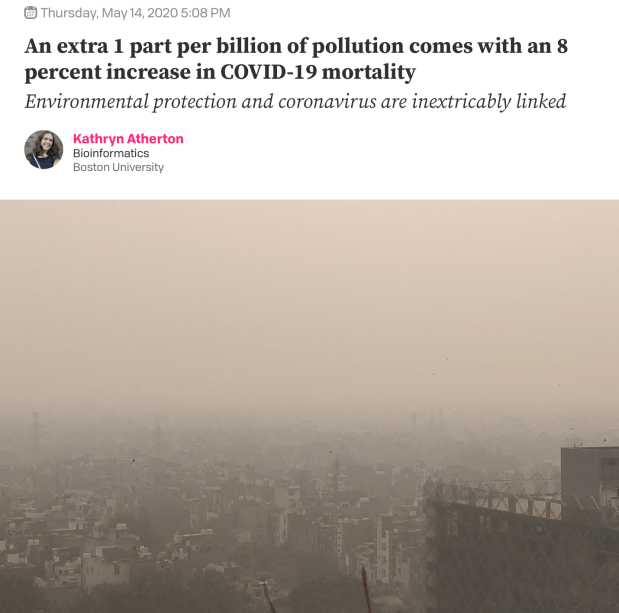
I wrote this article about a paper that I read while trying to come up with my graduate thesis topic. I was really intrigued by how urbanization could impact people’s health, and this paper led me to think more about how we could leverage microbes to improve urban ecosystem health. My work was re-posted by NPR’s Science Friday!
Publication:
Atherton, K. (2020). COVID-19 mortality is worsened by air pollution, new research finds. Massive Science Consortium.
Science Policy Experience
Boston University National Science Policy Network
President (2022-2024)
Secretary (2020-2022)
I led the Boston University graduate science policy club for two years, organizing meetings, workshops, and events for students interested in science policy. Events included:
- State Department Career Panel (2023): Members of the State Department Cities Team discussed their work in science diplomacy and their path from academia to science policy
- National Climate Assessment Public Comment Party (2022): Students wrote comments on the 5th National Climate Assessment based on their research expertise. Authors of the National Climate Assessment took the comments into account for future drafts of the report.
- Communicating Science, Shaping Policy Workshop (2022): A workshop with the Union of Concerned Scientists and GreenRoots on developing equitable partnerships with community groups
- Science Policy Elevator Pitch Workshop (2021): Students practiced their research elevator pitches and got feedback from their peers. They also practiced tweaking their pitches for different audiences (e.g. a fifth-grade classroom, the Mayor of Boston, or members of the public at a science museum)
- How to Write a Policy Memo Workshop (2020): Panelists who work in science policy discussed their experience writing policy memos and showed examples of policy memos they have written





Catalyzing Advocacy in Science and Engineering Workshop (CASE)
(March 2023)
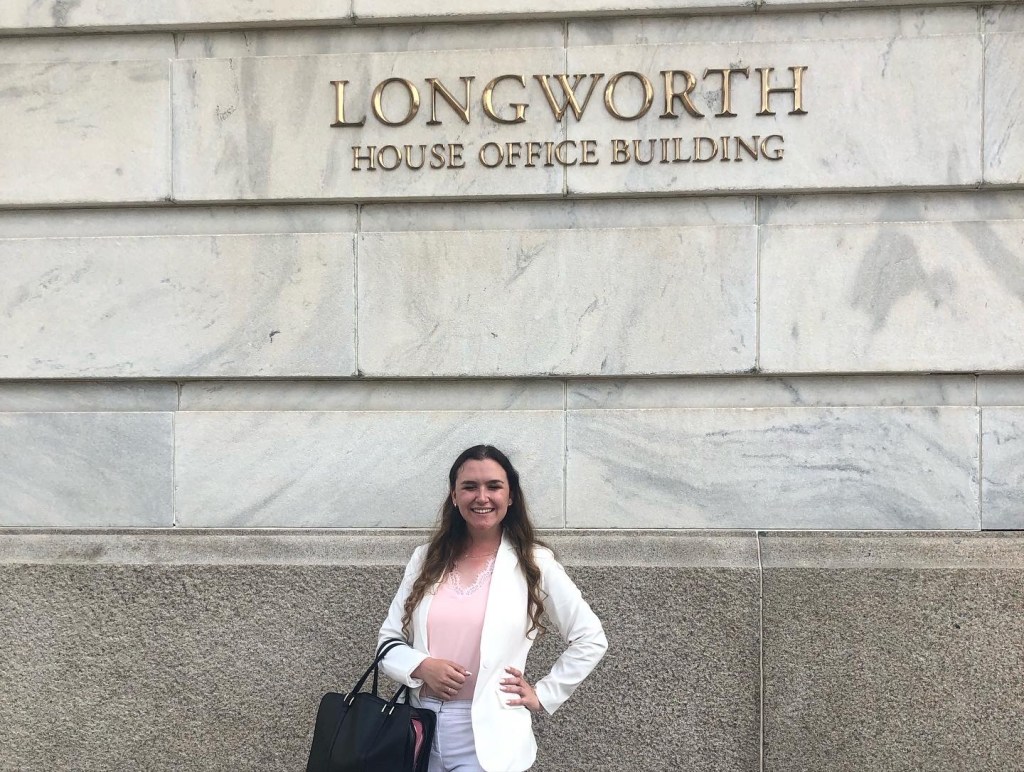
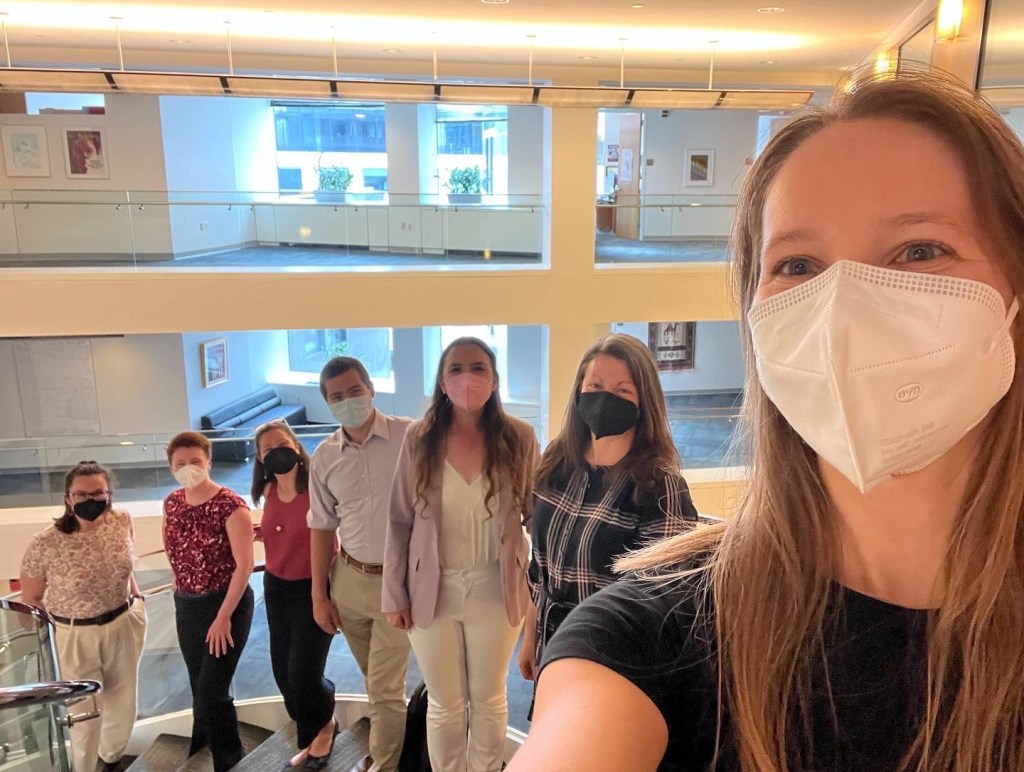
I represented Boston University at a four-day workshop in Washington D.C. to learn about the role of science policymaking, the federal policy-making process, and the federal budget and appropriations process. I then met with legislative fellows from the offices of Representatives Jim McGovern and Jake Auchincloss and Senators Elizabeth Warren and Ed Markey.
Microbiome Hill Day
(December 2022)
I represented Boston University and the American Society for Microbiology in meetings with legislative fellows from the offices of Representatives Katherine Clark and Jim McGovern, Senator Ed Markey, and the majority and minority House Science Committee to discuss funding microbiome-related research and incentivizing collaboration in the field.
Engaging Policymakers in Washington D.C.
(Summer 2022)
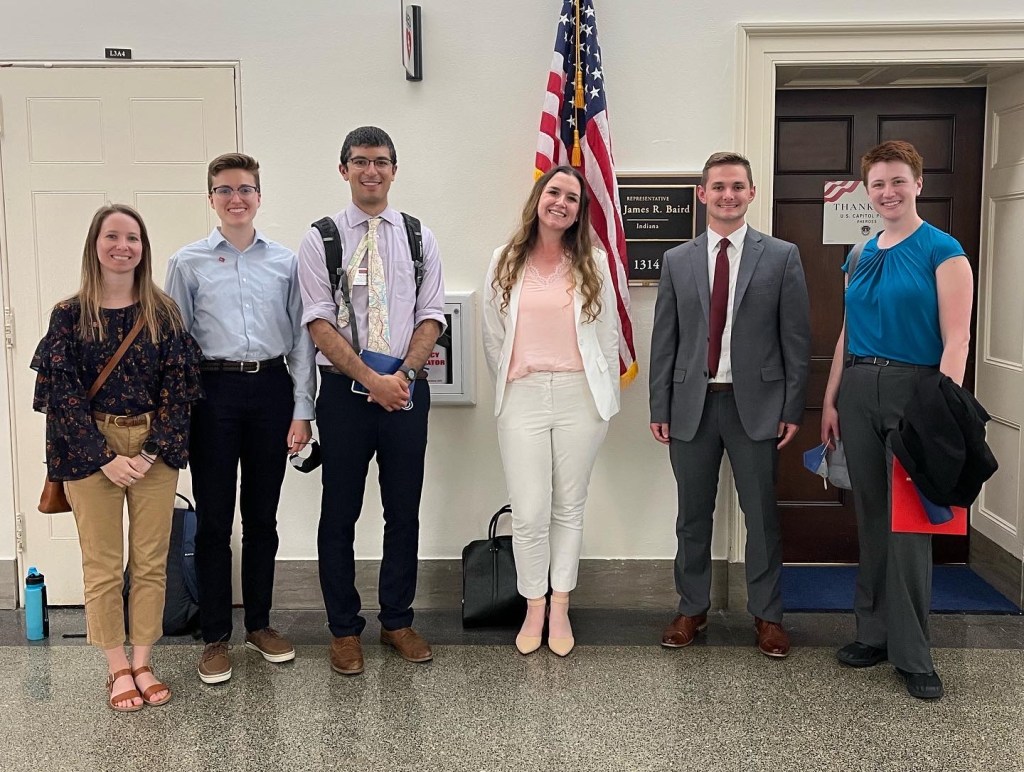
I was funded by the URBAN Program to go to Washington D.C. to learn how I can blend my science with federal policy, build relationships with policymakers, and network with scientists working in policy with various non-governmental organizations. I then met with legislative fellows from the offices of Senator Elizabeth Warren and Representatives Jim Baird, Jake Auchincloss, Joe Neguse, and Marie Newman to discuss National Science Foundation Research Traineeship funding. I also networked with scientists in policy-relevant careers from the Union of Concerned Scientists and the Science and Technology Policy Institute. I was invited to present my reflections on this meeting at the Boston University URBAN Symposium the following Fall.
Science Advocacy Day
(May 2021)
I represented Boston University and the American Geophysical Union in meetings with legislative fellows from the offices of Representative Ayanna Pressley and Senator Elizabeth Warren to discuss science funding.
Boston Science Survey
(Summer 2021)
I worked with local science stakeholders to develop science policy-related questions for candidates running for city-wide office. I then helped to develop a website and Twitter account to present the candidates’ unedited responses to the survey.
Massachusetts Science Debate
(Fall 2020)
I worked with the Massachusetts Science Policy Network to develop science policy-related questions for candidates running for statewide office. I then organized a panel of science policy stakeholders to discuss the candidates’ answers and their potential consequences for Massachusetts residents.
American Institute for Medical and Biological Engineering Public Policy Institute for Rising Leaders
(October 2019)
I represented Boston University at a workshop in Washington D.C. to network with other policy-focused graduate students and learn about the various ways that science influences federal policy and how policy influences science.
 Kathryn Atherton